
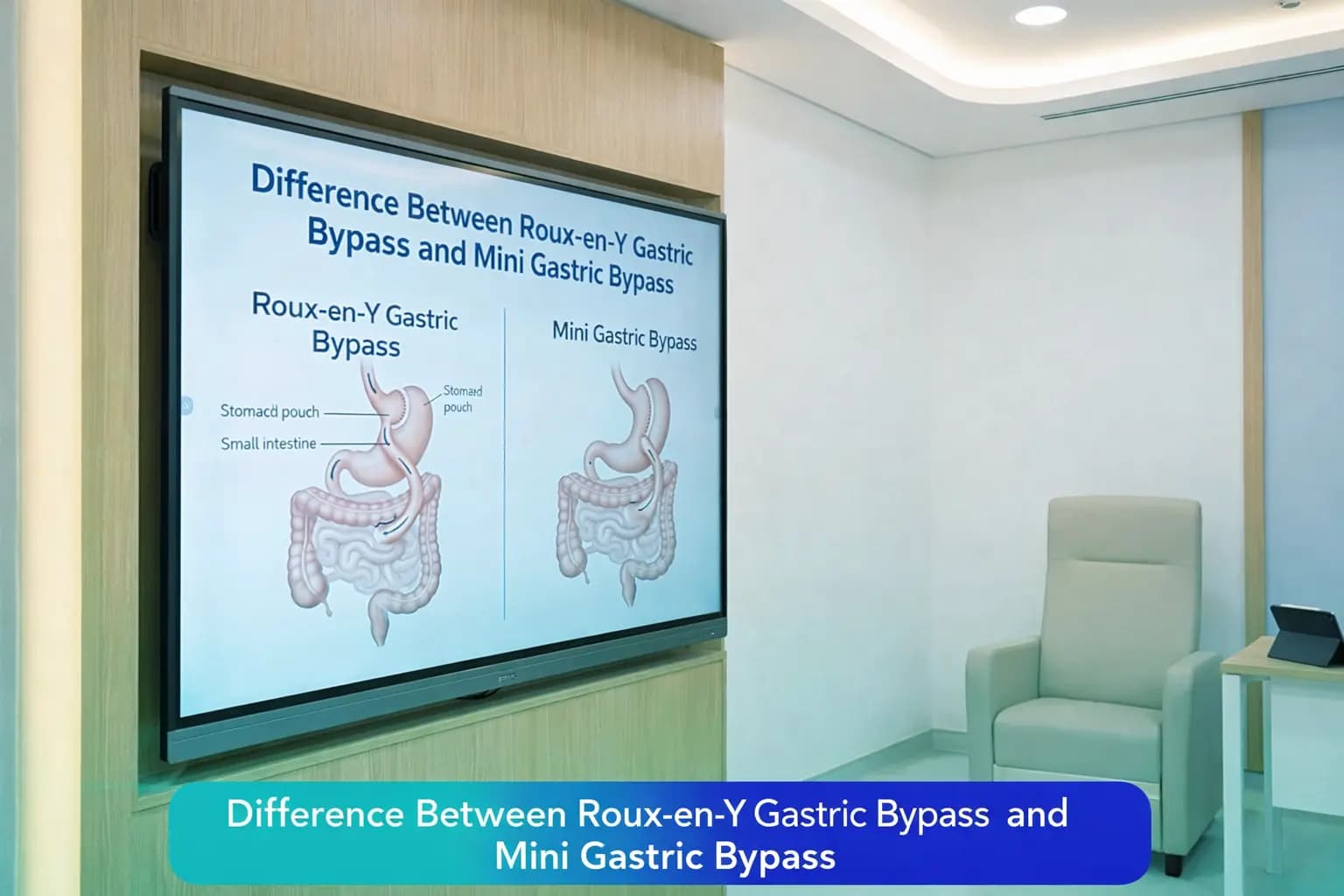
The topic of gastric bypass vs mini gastric bypass is one of the most common questions among patients with severe obesity—especially those who have not achieved sustainable weight loss through diet plans or medical treatments.
With the growing number of modern bariatric procedures, it has become essential to rely on accurate medical information based on surgical experience and trusted clinical studies. This article explains the scientific differences between Roux-en-Y gastric bypass and mini gastric bypass in a professional medical style to help patients make a safe and effective treatment decision.
1. What Is Gastric Bypass Surgery? (Classic Roux-en-Y)
Gastric bypass is a well-established bariatric procedure that has been used for decades to treat morbid obesity. It is based on two main principles:
- Reducing stomach size to limit food intake
- Reducing calorie absorption by bypassing part of the small intestine
Roux-en-Y gastric bypass is one of the most studied and trusted weight-loss surgeries worldwide. It is often recommended for patients with:
- Type 2 diabetes
- Obesity with serious complications
- Metabolic syndrome
2. What Is Mini Gastric Bypass?
Mini gastric bypass (MGB) is a modified version of the classic gastric bypass, developed to reduce surgical complexity while maintaining high effectiveness.
It is considered one of the advanced bariatric procedures and is based on:
- Creating a long, narrow tubular stomach pouch
- Connecting it to the small intestine through one single anastomosis (one connection)
This simplified technique reduces operating time and may allow faster recovery, making mini gastric bypass a popular option in specialized bariatric centers.
3. Differences in Digestive Absorption (Malabsorption Mechanism)
The key difference between gastric bypass and mini gastric bypass in terms of absorption includes the following:
Classic Gastric Bypass (Roux-en-Y)
- Bypasses a longer segment of the small intestine
- Causes greater reduction in calorie absorption
- Produces a stronger impact on gut hormones and metabolic function
- Requires closer long-term nutritional monitoring and supplementation
Mini Gastric Bypass
- Bypasses a relatively shorter segment of the small intestine
- Offers a balance between weight loss and lower malabsorption risks
- Typically results in better nutrient absorption than classic bypass
- May require a less complex supplement plan, although follow-up remains essential
4. Surgical Differences Between Gastric Bypass and Mini Gastric Bypass
1) Number of Surgical Connections (Anastomoses)
- Gastric bypass requires two connections:
- Stomach-to-intestine
- Intestine-to-intestine
- Mini gastric bypass requires only one connection
2) Surgery Duration and Risk Profile
Clinical experience suggests that mini gastric bypass generally:
- Takes less time in the operating room
- May reduce the risk of bleeding and complications associated with longer anesthesia duration
3) Weight Loss Results
Both procedures achieve significant and long-lasting weight loss.
However, some patients experience faster weight loss during the first year after mini gastric bypass.
4) Impact on Chronic Diseases
Both gastric bypass and mini gastric bypass can lead to:
- Significant improvement in type 2 diabetes
- Lower blood pressure
- Better cholesterol and triglyceride levels
5. Complications and Long-Term Follow-Up
Nutritional Deficiencies
- Classic gastric bypass has a higher risk of deficiencies in:
- Iron
- Vitamin B12
- Calcium
- Mini gastric bypass may carry a lower risk, but supplementation and routine lab monitoring remain necessary for both procedures.
Bile Reflux Risk
Bile reflux is a possible complication in some mini gastric bypass cases. However, it is considered rare when:
- Patients are selected appropriately
- The procedure is performed using proper surgical technique
6. Future Flexibility and Revision Options
Classic Gastric Bypass
- Offers greater flexibility for revision if needed
- Provides more options for managing reflux or severe malabsorption
- Has a higher potential for corrective surgery in the future
- Often preferred for complex cases
Mini Gastric Bypass
- Technically simpler
- Revision options are more limited compared to Roux-en-Y
- Requires careful procedure selection from the start
- Often suitable for patients without complex digestive complications
7. Which Procedure Is Better? A Medical Opinion Based on Individual Evaluation
There is no “perfect” surgery for everyone. The best bariatric procedure depends on factors such as:
- Body mass index (BMI)
- Presence of acid reflux or chronic diseases
- Lifestyle and eating habits
- Commitment to long-term follow-up
For this reason, the final decision should be made by a qualified bariatric surgeon after a full medical evaluation—not based on other patients’ experiences.
Frequently Asked Questions (FAQ)
1) Are both procedures safe?
Yes. Both procedures are considered safe when performed in specialized centers by experienced bariatric surgeons.
2) When will weight loss results appear?
Weight loss usually begins within the first few weeks and continues gradually over 12 to 18 months.
3) Does the difference between gastric bypass and mini gastric bypass affect success rates?
Yes. Differences in technique may affect the speed of weight loss and follow-up requirements, but long-term success depends mainly on patient commitment, not only the procedure type.
4) Which is better for patients with type 2 diabetes?
Evidence suggests both procedures are effective in improving type 2 diabetes, but classic Roux-en-Y gastric bypass may be preferred in severe cases.
5) Does mini gastric bypass cause fewer nutritional deficiencies?
Mini gastric bypass may be less associated with certain deficiencies compared to classic bypass. However, supplements remain necessary in all cases.
6) Is recovery time different between the two procedures?
Recovery after mini gastric bypass is often slightly shorter due to the simplified technique and shorter surgery duration.
7) Can mini gastric bypass be converted into classic gastric bypass?
Yes, in rare medical cases it can be revised surgically, but the decision depends on a detailed evaluation by the surgeon.
Conclusion
The difference between gastric bypass and mini gastric bypass mainly lies in surgical technique, the number of connections, and certain complication profiles. However, both procedures share high effectiveness in treating obesity and improving related conditions.
When the right patient selection criteria are applied, both surgeries are safe and reliable based on modern medical evidence.
Frequently Asked Questions
Mini gastric bypass may be less associated with certain deficiencies compared to classic bypass. However, supplements remain necessary in all cases.
 Book Now