
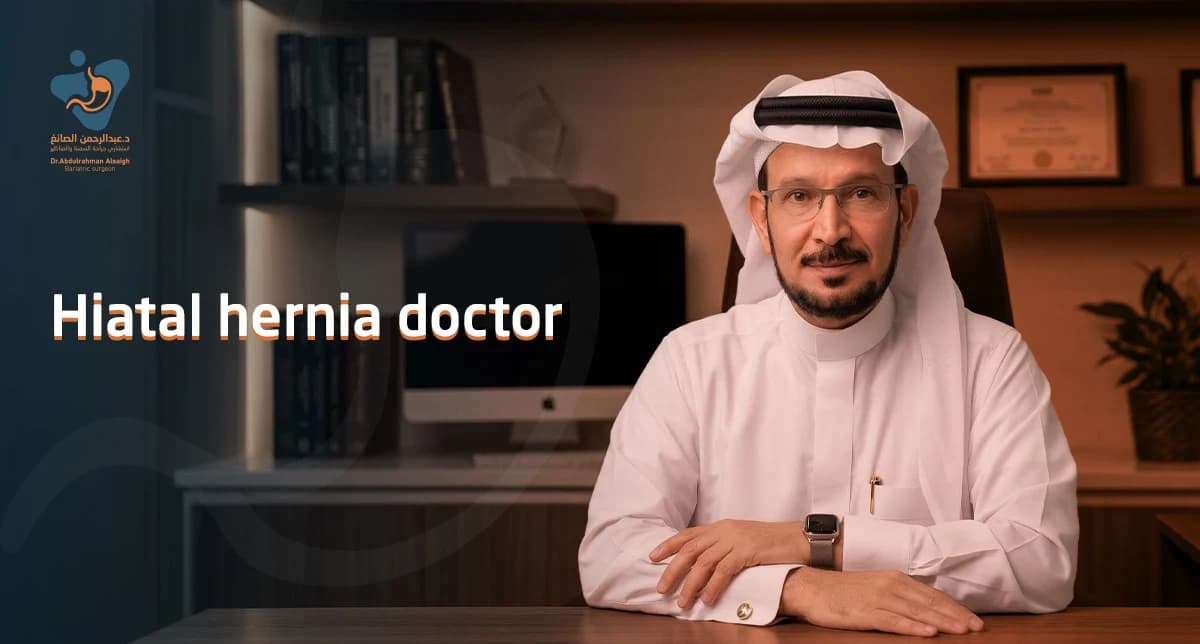
A hiatal hernia is a stomach problem that can affect your daily comfort and quality of life.
It happens when a part of your stomach pushes up through a hole in your muscle (the diaphragm) and into your chest; this can cause annoying problems like heartburn, acid reflux, and chest pain.
In many cases, you can control these signs with medicine and simple lifestyle changes; however, in other cases, a patient might need surgery to fix the problem for good.
That is why choosing an expert hiatal hernia doctor who specializes in digestive surgeries is a very important step for a successful treatment.
In this article, we will talk about hiatal hernia symptoms, treatments, surgery costs, and success rates.
We will also highlight the role of Dr. Abdulrahman Al-Sayegh in treating this condition using the newest medical tools.
Hiatal Hernia Symptoms
At first, some patients might not feel anything, especially if the hernia is small, but as it gets bigger, you may notice these signs:
- Severe heartburn.
- Stomach acid going back up into your throat (acid reflux).
- Difficulty swallowing.
- Chest pain or pressure.
- Feeling bloated after eating.
- Burping a lot.
- Feeling sick to your stomach (nausea) or throwing up.
If left untreated for a long time, the repeated acid reflux can cause chronic inflammation in your food pipe (esophagus).
Hiatal Hernia Treatment
Treatment depends on how bad your symptoms are and the size of the hernia; doctors usually start with simple steps before suggesting surgery.
1. Medicines
The goal is to reduce acid reflux symptoms, which includes the following:
- Medicines to lower stomach acid.
- Medicines to stop acid production.
- Medicines to help your digestive system move better.
2. Lifestyle Changes
Some daily habits can help reduce the pain:
- Avoid spicy and fatty foods.
- Do not lie down right after eating.
- Eat small meals instead of big ones.
- Keep a healthy body weight.
3. Surgery
If medicines and lifestyle changes do not work, or if the pain is too much, your doctor may advise surgery to fix the hernia and stop any future problems.
Hiatal Hernia Surgery Cost
The cost of the surgery changes from one person to another based on a few things:
- The surgeon's experience and the hospital's level.
- The type of medical technology used.
- The medical tests needed before the surgery.
- How many days you stay in the hospital.
Prices vary between medical centers, so it is best to consult a hiatal hernia doctor to check your case and give you the exact cost.

Is the Surgery Successful? Will the Hernia Return?
Hiatal hernia surgery has a very high success rate; when done by an expert surgeon, the success rate is often over 90%.
The chance of the hernia coming back is very low, especially if you follow your doctor's rules after the surgery, such as:
- Do not lift heavy things for a certain time.
- Follow the recommended diet plan.
- Visit your doctor regularly for check-ups.
Laparoscopic Hiatal Hernia Surgery
The newest and best way to fix a hiatal hernia is with laparoscopic surgery. The doctor makes very small cuts in the belly and uses a tiny camera and special tools to do the surgery.
This method is now the first choice for most cases because it has many benefits over traditional open surgery.
What is the Goal of Laparoscopic Surgery?
This surgery aims to:
- Pull the stomach back to its normal place in the belly.
- Close the hole in the diaphragm.
- Make the muscle stronger so the hernia does not happen again.
- Stop the acid reflux completely.
Types of Hiatal Hernia Surgery
There are a few ways to do the surgery, and the doctor will choose the best one for you based on your health:
1. Hernia Repair Surgery:
The doctor pulls the stomach back down into the belly and then closes the hole tightly with stitches or a special medical mesh to keep it strong.
2. Stomach Wrapping (Nissen Fundoplication):
The doctor wraps the top part of the stomach around the lower part of the food pipe; this strengthens the valve to stop acid from going up, which greatly reduces heartburn.
3. Laparoscopic Surgery:
As we mentioned, this is the most popular method today because it uses very small cuts, patients have fewer risks, heal much faster, and go back to their normal lives quickly.

Important Tips After Laparoscopic Surgery
The most important tips are the following:
- Follow your doctor's exact diet plan.
- Eat only soft foods for the first few days.
- Avoid lifting heavy objects.
- Take short, light walks to improve blood flow.
- Take your medicines on time.
- Go to your follow-up appointments.
Laparoscopic Surgery Success Rate
This modern surgery has a very high success rate of up to 95%, especially when done by a top hiatal hernia doctor with great experience.
This method also helps to:
- Have less pain after the surgery.
- Stay in the hospital for a shorter time.
- Return to a normal life much faster.
Why is Dr. Abdulrahman Al-Sayegh One of the Best Hiatal Hernia Doctors?
When you look for a hiatal hernia doctor, you must choose someone highly skilled in digestive surgeries.
Dr. Abdulrahman Al-Sayegh is a top expert in diagnosing and treating digestive diseases; he uses the best and newest medical tools to perform hernia surgeries.
This ensures that patients get the best results, fewer risks, and a very fast recovery time.
A hiatal hernia can cause a lot of daily pain if you ignore it; finding it early and choosing an expert doctor will help you decide the best treatment, whether it is medicine or laparoscopic surgery.
If you have hernia symptoms or need a careful medical check, Dr. Abdulrahman Al-Sayegh offers top-level care using the latest surgical methods to ensure the best results for your health.
 Book Now